The Knife in Mid-Air; Sermon Thoughts on Art and Scripture, June 28, 2026

Reverend Canon George Conger

The knife in mid-air: Sermon thoughts on art and scripture for Sunday June 28, 2026


George Conger

Jun 22, 2026


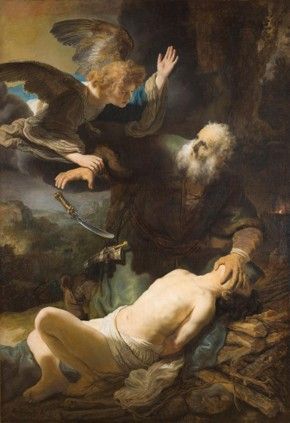
The painting hangs in the Hermitage in St. Petersburg. Rembrandt finished it in 1635, oil on canvas, six and a half feet tall. He was twenty-nine years old. He had only recently come into his own as a painter of biblical narrative. He chose to paint the moment most artists avoid.


Abraham has bound his son. Isaac is naked, his head pulled back, his throat exposed. Abraham’s left hand is clamped across his face, a gesture half of love and half of expedience. He does not want to see what he is about to do, and he does not want the boy to see it. His right hand has just released the knife. The angel has seized his wrist from behind. The blade is in the air. It is falling. It is inches from the boy’s chest.


Rembrandt van Rijn, The Sacrifice of Isaac (1635) Hermitage Museum, St Petersburg Most paintings of the Akedah show the angel arriving in time. Rembrandt shows the knife already on its way. The reprieve is not theoretical. It is a hand on the wrist at the last possible instant.

Look at the painting. Then read Genesis 22.


“And it came to pass after these things, that God did tempt Abraham, and said unto him, Abraham: and he said, Behold, here I am. And he said, Take now thy son, thine only son Isaac, whom thou lovest, and get thee into the land of Moriah; and offer him there for a burnt offering.”


The KJV - the Authorized Version - uses the verb tempt. The Hebrew is nissah. To test, to prove, to try by ordeal. Calvin in his commentary on Genesis says God did not need to learn whether Abraham would obey. God tested Abraham so that Abraham would learn what he himself believed. The fire was for the man, not for the LORD.


Three days they walked. Three days is the time it takes for a thing to die. Three days is the time Christ would lie in the tomb. The chronology is not accidental. The Fathers were unanimous on this. Augustine, Chrysostom, and after them the whole medieval tradition read Moriah as Calvary. Isaac carries the wood up the hill on his own back. Abraham carries the fire and the knife. The boy asks, “Where is the lamb?” The father answers, “God will provide himself a lamb.” In the Vulgate: Deus providebit sibi victimam. God will provide for himself the victim.


The Letter to the Hebrews picks this up directly. “By faith Abraham, when he was tried, offered up Isaac… accounting that God was able to raise him up, even from the dead; from whence also he received him in a figure.” In a figure. En parabolē. As a type. Hebrews is reading the Akedah as a parable acted out three days before its meaning was clear. The boy is given back as from the dead. Abraham receives him as one already raised.


This is the OT lesson appointed for Sunday. It is the hardest reading in the cycle. There is no way to soften it. The text demands a son. The text demands obedience to the point of holding the knife. The text does not give Abraham a way out until the angel speaks.


There is also a gospel. Matthew 10 ends with three short verses that complete the missionary discourse Jesus has been giving the Twelve. “He that receiveth you receiveth me, and he that receiveth me receiveth him that sent me. He that receiveth a prophet in the name of a prophet shall receive a prophet’s reward… And whosoever shall give to drink unto one of these little ones a cup of cold water only in the name of a disciple, verily I say unto you, he shall in no wise lose his reward.”

Set the two passages next to each other and the shape of the week’s preaching emerges. The Akedah asks the great question. What will you give up for God? The Gospel answers in the smallest possible currency. A cup of cold water given in the name of a disciple. The God who asked Abraham for everything is the same God who counts a cup of water.


Jeremy Taylor, the Caroline Divine, wrote in Holy Living that the test of faith is not the great trial but the daily one. “He that will not be faithful in a little, will not be faithful in much; and he that despises the lesser graces, shall not be trusted with the greater.” Taylor understood that the cup of cold water and the knife on Moriah are the same instrument in different sizes.


Now three points of application.


First, do not read the Akedah as a problem. Read it as a mirror. The temptation, when Genesis 22 is preached, is to spend the sermon defending God against the charge of cruelty. That is not what the text is doing. The text is asking the congregation what it is currently being asked to give up. Most of us are not being asked for an Isaac. Most of us are being asked for a Tuesday afternoon. Or a particular grievance. Or an idol the family does not yet know is an idol. The question of Moriah is alive in every life. It does not look like Rembrandt’s painting. It looks like the small thing you have been refusing to put on the altar this week.


Second, hold the knife. The temptation in Christian devotion is to skip to the angel’s intervention before the test has been felt. Abraham did not skip. He raised the knife. Faith, in Hebrews 11, is not the certainty that the ram will appear. It is the obedience that proceeds without the ram in view. If you wait for certainty before you obey, you will not obey. Hebrews calls Abraham faithful because he reckoned that God could raise the dead. He did not reckon that God would intervene in time.


Third, do not despise the cup of water. The same God who asks for Isaac records the cup of water. The disciple’s whole vocation is not made of Moriahs.


It is made by small acts of fidelity. A meal taken to a sick neighbor. A phone call to someone who is alone. A check written without telling anyone. The Lord notices these. He will not forget them. Matthew 10:42 is the gospel’s promise that the small obediences are not lost in the noise.


Fourth, look at the painting again. Rembrandt has caught the knife in mid-air. That is where most of our lives are. The thing has not yet happened. The reprieve has not yet been announced. The hand of God is on the wrist, and the blade is still falling, and the angel’s voice has not yet been heard.


Trust that hand. The blade will not reach the boy. The ram is in the thicket already. You have not yet seen it. You will.


Take to the altar this Sunday whatever you have been carrying up the hill. Hold the knife. Let the hand of God catch your wrist.


Lectionary citations from the Episcopal RCL, Proper 8A, Year A, Track 1: Genesis 22:1–14; Psalm 13; Romans 6:12–23; Matthew 10:40–42. Painting: Rembrandt, The Sacrifice of Isaac, 1635, oil on canvas, 193 × 132 cm, State Hermitage Museum, St. Petersburg. Working sources: Augustine on the typology of Isaac, City of God XVI.32; Calvin’s Commentary on Genesis 22; Jeremy Taylor, Holy Living.


By George Conger June 16, 2026
Musings on the Gospel for the Fourth Sunday after Pentecost — Proper 7, Year A

March 4, 2025
The Quiet, Fruitful Season of Lent 
By The Reverend Canon George Conger February 17, 2024
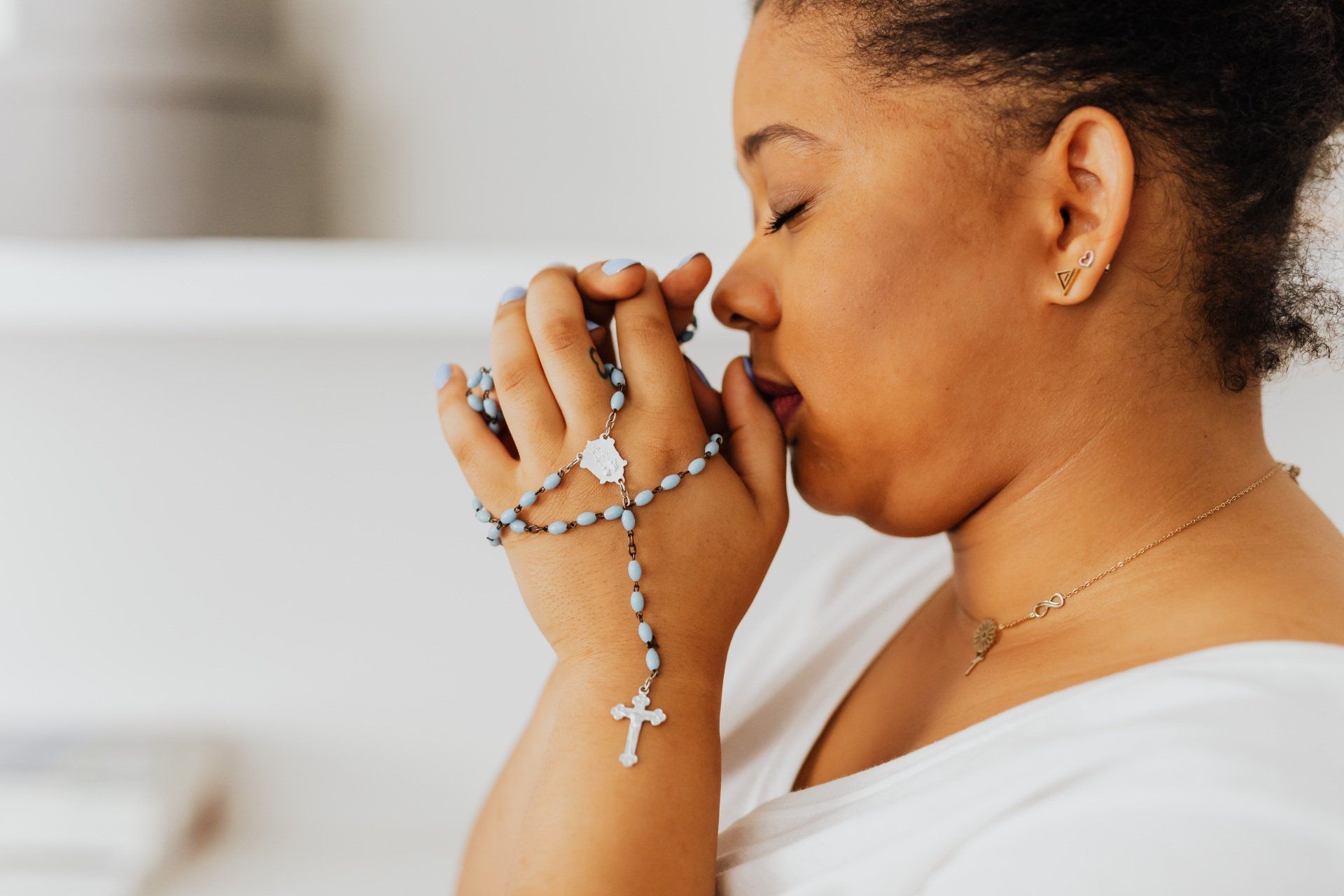
Healthy Praying Thinking about a New Year’s Resolution this week? My resolutions usually focus on improving my health. Have you resolved to exercise more, to lose a little weight, to adopt a healthy diet? There is another practice you can adopt this year to improve your health that also connects you to God. That is prayer. It is no secret that the practice of daily prayer and devotion brings spiritual blessings, but science now recognizes that it is also a source of physical health. Adopting a daily regimen of prayer – not just praying when the shells are about to land on your foxhole – helps you breathe in a way that strengthens your cardiovascular and nervous systems. In a 2001 study published in the British Medical Journal, scientists at the University of Pavia in Italy undertook a study on the health benefits of praying the rosary. Twenty-three test subjects, all in good physical condition, had sensors placed on their body to measure blood flow, cardiac rhythm, and nervous system activity while they recited the rosary. The Roman Catholic rosary is a Scripture-based prayer that begins with the Apostles' Creed, followed by the Lord’s Prayer, then the passage from the Gospel of Luke that begins the Hail Mary prayer and concludes with Elizabeth’s greeting to Mary from the same Gospel passage. For Roman Catholics, the rosary prayers center on the events of Christ's life and focus on four sets of Mysteries: Joyful, Sorrowful, Glorious, and Luminous. Catholic rosary beads have 49 beads: six large and 43 small, and a Cross. The beads are divided into four groups of ten called ‘decades’, separated by large beads, with three small and two large beads on a small strand that ends with the Cross. The Anglican Rosary prayers, which were offered at SOTH on Wednesdays before COVID, and which we hope to restart this year, are shorter and have a similar structure. Anglican prayer beads have 33 beads, five large and 28 small, forming a circle with one large bead and a cross outside the circle at the top. Inside the circle are four large beads, separated by seven small beads. These groups of seven are called ‘weeks’, and can be used for different prayers. Anglican rosary prayers do not have a formal structure like the Catholic Rosary but are self-designed, using the Lord’s Prayer, the creeds, seasonal prayers, the Jesus Prayer, and any other prayer that is important to your spiritual life. Praying an Anglican rosary begins with the Cross and large bead outside the circle, and then proceeds to the weeks. In my private devotions, I begin by taking the cross in my left hand and saying a prayer from the Compline service: “O Lord make speed to save us, O Lord make haste to help us”. I then take in my fingers the external large bead and say: “Glory to the Father, and the Son, and the Holy Spirit, as it was in the beginning, is now and ever shall be, world without end, Amen.” Then I begin the weeks. In the tests, the sensors registered a slowdown in the participants’ breathing, which caused the flow of blood to the brain and the variability of the cardiac frequency to begin to increase. This helped the heart and the nervous system to function with their greatest efficiency. When the participants ended their prayers and spoke and breathed as they normally did, blood and nerve flow reverted to their normal status. In 2013 New York doctors, Patricia Gerbarg and Richard Brown carried out two studies published in the book: “Breath: The New Science of a Lost Art.” They concluded that the most efficient breathing was when patients inhaled for 5.5 seconds and exhaled for 5.5 seconds, breathing between 5 and 6 times per minute. These studies helped survivors of 9/11, who suffered a chronic cough from exposure to the rubble. Practicing the 5.5-second breathing cycle for ten minutes a day, had long-term positive results on the cardiac, pulmonary, and nervous systems of those who faithfully practiced this discipline. It is not the prayer beads that provide the spiritual and health benefits – it is the practice of prayer that accomplishes this. The beads are merely a tool, akin to a Prayer Book, to assist you in your devotions. So if you want to get healthy this year: lose weight, exercise, change your diet – and adopt a prayer protocol that strengthens your soul as well as your body.  Happy New Year!
By The Reverend Canon George Conger February 15, 2024
Scripture Reveals 11 Distinct Ways